Test Results · Transparency
What's in our jars, and what isn't.
No regulator requires most of these tests. We run them anyway, through an ISO-17025 accredited third-party lab: heavy metals every month, the full panel every quarter. And we publish the results.
200+
contaminants tested
5
contaminant categories, fully published
ISO
ISO-17025 accredited third-party partner lab
1Our Approach
Test for what matters. Publish all of it.
We believe transparency in this category is inherently good, and sorely needed. The more brands test for a broader range of contaminants regularly and publish the results, the better we can understand the contamination challenge in our food system.
Some level of trace contamination is unfortunately unavoidable in our current food supply: heavy metals in the soil, plastics throughout the supply chain, and even pesticide residue from neighboring fields. Testing and transparency, however, are the first step to create a healthier food supply for you and your little one.
2What We Test For
Five contaminant categories. Heavy metals monthly, everything else quarterly.
Regulatory comparison figures are for baby food and reflect EU and US (FDA) limits current as of June 2026; these may change. Informational only; not medical or regulatory advice.
01
Heavy metals
Heavy metals like lead, cadmium, arsenic, and mercury occur naturally in soil and can concentrate in some crops. They are the most heavily regulated contaminant category in baby food because of their effects on infant neurodevelopment.
So far, the FDA has only set a limit for lead. For cadmium and arsenic, we use the maximum levels established by the European Union for foods intended for infants and young children as internal reference thresholds. For mercury, neither the FDA nor the EU have set a specific limit, so we use an internal threshold based on published toxicological reference values.
- Cadence
- Monthly
- Coverage
- Lead, cadmium, arsenic, mercury
| Metal | Our limitTinynosh | EU | FDA |
|---|---|---|---|
| Lead | 10 ppb | 20 ppb | 10 ppb |
| Cadmium | 40 ppb | 40 ppb | No limit set |
| Total arsenic | 20 ppb | 20 ppb | No limit set |
| Mercury | 10 ppb | No limit set | No limit set |
02
Pesticides
Our organic ingredients are grown without synthetic pesticides — but residues can still drift over from neighboring non-organic fields. So we test for 190+ pesticides anyway, to make sure it is within our acceptable limits.
- Cadence
- Quarterly
- Coverage
- 190+ pesticides
| Our limitTinynosh | EU | FDA | |
|---|---|---|---|
| Limit | 50 ppb | 10 ppb | No limit set |
03
Glyphosate
Glyphosate is the most widely used herbicide in the world. It is prohibited in organic produce, but we still test for it and its breakdown product AMPA against EU baby food limits, because contamination from nearby fields can occur.
- Cadence
- Quarterly
- Coverage
- Glyphosate and AMPA
| Our limitTinynosh | EU | FDA | |
|---|---|---|---|
| Limit | 10 ppb | 10 ppb | No limit set |
04
Bisphenols
BPA is part of the chemical family of bisphenols. Historically, it has been added to plastics to make them hard, or used as a protective lining. BPA is an endocrine disruptor that can interfere with hormone signaling, which is why regulators including the EU and the FDA have restricted its use. As BPA is phased out, it is often replaced with related chemicals like BPS and BPF. We test for all three.
No regulator has set finished-product limits for bisphenols in baby food. So we set our own: we do not ship food that shows any detectable bisphenols.
- Cadence
- Quarterly
- Coverage
- BPA, BPF, BPS
| Our limitTinynosh | EU | FDA | |
|---|---|---|---|
| Limit | Not detected | No limit set | No limit set |
05
Phthalates
Phthalates are plasticizers used widely in food-contact materials like plastic packaging and processing equipment. As a result, food can contain measurable phthalate levels before it even enters a production facility. We minimize exposure at three points:
- Ingredient testing: We test individual ingredients for phthalates and swap them when detections are higher than we consider acceptable and an adequate substitute is available.
- PVC-free, plasticizer-free lids: Conventional metal lids have a PVC-based liner that can leach phthalates into the food. We import PVC-free, plasticizer-free lids from Europe, where we sourced them after finding no equivalent US supplier.
- Production equipment: We minimize plastic materials in production wherever possible.
No regulator has set finished-product limits for phthalates in baby food. So we set our own: we will not ship product where any single phthalate exceeds 30 ppb. We chose 30 ppb because it is achievable with current ingredient sourcing while keeping a single jar contribution well below toxicological reference values. Our goal is to lower this limit over time further.
- Cadence
- Quarterly
- Coverage
- 20+ phthalates
| Our limitTinynosh | EU | FDA | |
|---|---|---|---|
| Limit | 30 ppb | No limit set | No limit set |
3Full Results
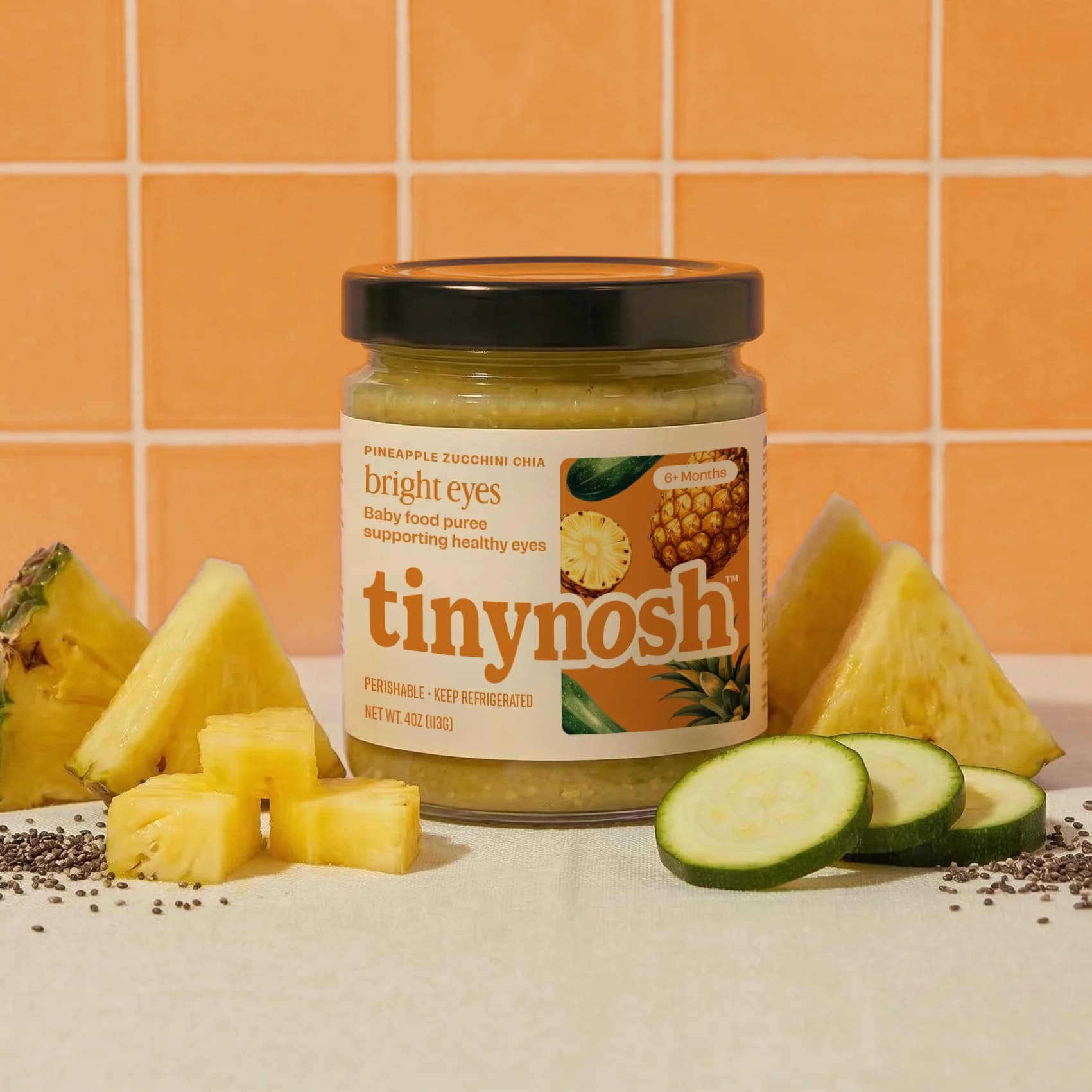
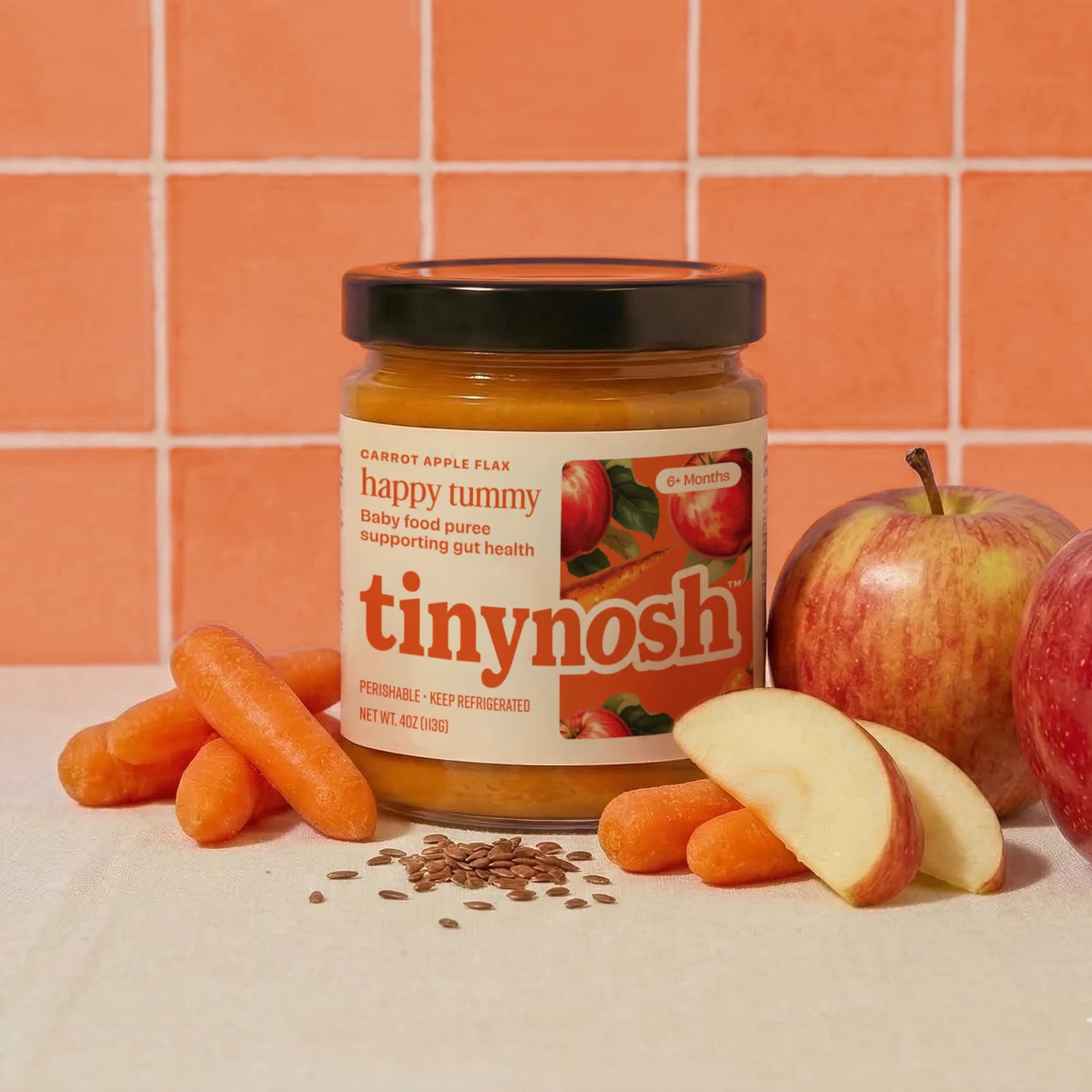
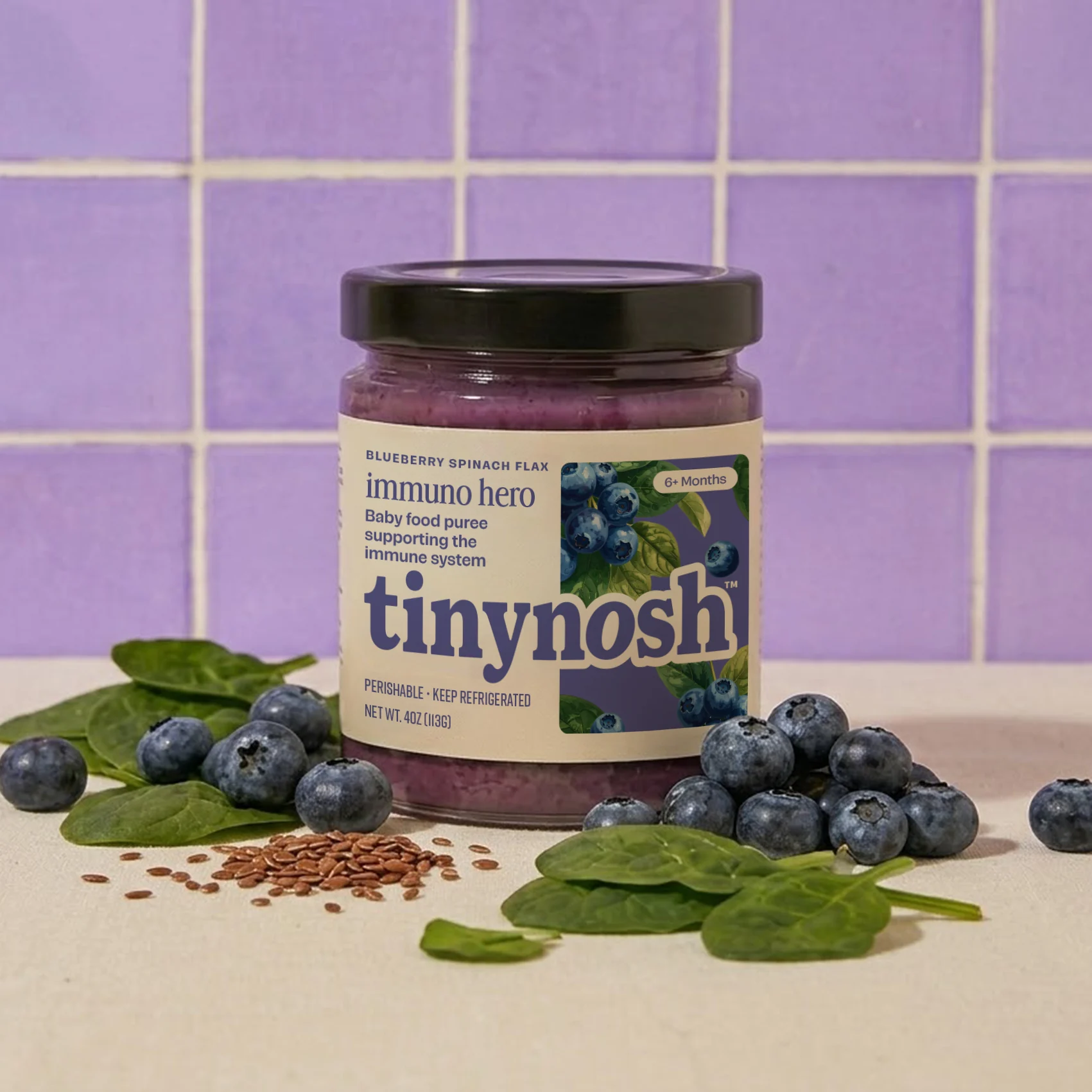
View test results for every live jar.
Results are published by recipe as each round of testing completes, and are available without a UPC, lot number, or best-by date.
4Contributing to the Science
Infant-exposure science has real gaps. We want to help close them.
The science of contaminant exposure in infant diets has real gaps, particularly for plastic chemicals where no regulator has set finished-product limits. Brands that test and publish at scale can help close them. We're actively seeking academic and public health research collaborations. If you are a researcher interested in partnering, reach out to info@tinynosh.com.